"Populist nationalism is a symptom, not a cause of the disorder of liberal societies."
One of the two most important themes of our time is the current surge of nationalist populism (the other is climate change), which will have a strong influence upon culture and how it is perceived. The idea of a cosmopolitcan, liberal and democratic civilization, which is now under threat, is a result of the rationalistic component of the Enlightenment, stressing universal values of humanity across cultural differences. This leaves some emotional needs of the human being in the darkness of isolation, uprootedness, alienation and loneliness, especially the people who don't share in the assets and advantages of cosmopolitism which are mainly material. This flaw of modern, democratic liberal societies is the cause of populism, which is an instinctive reaction now that those flaws have become more visible than ever. The challenge consists in finding a way of channelling the emotional drives that erupt in primitive attacks upon the very institutions that are supposed to protect freedoms and the rule of law.
Very interesting article by John Gray, a review of two books on the subject:
The implications of the current identity debates for culture are hughe, since the arts are, to a great extent, symbols of cultural identity. Nothing demonstrates the dangers of materialist emptiness and nihilism - result of an exaggerated, perverted modern version of Enlightenment values - better than the establishment of the modern art world, with its absurd objects being sold for absurd prices to absurd people.
About Me
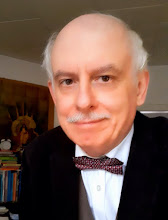
- The Subterranean Review
- Education: Rotterdam Conservatory, Cambridge University // Activities: composition, writing
Saturday, 13 October 2018

Friday, 12 October 2018
Art and politics
Art is, in itself, neutral, but it can easily be misused for political ends. History shows many examples and the difficulty is to consider the work of art without including its political message. The glorifying ceiling paintings in the hall of mirrors at the Versailles palace are embarrassing propaganda, but from a purely aesthetic point of view, they are not bad art, although it is superficial and rings with a hollow pathos:

Charles le Brun: 'The King governs by himself'
Similar paintings were made for Napoleon, and of course the 20th century is filled to the brim with artistic/ethical embarrassment. In music, Beethoven's symphonies were used as symbols both of the nazi regime in Germany and the allies. The German conductor Wilhelm Furtwängler remained in Germany, in spite of his increasing understanding of the regime's nature, but not enough: his conducting for nazi officials under a big swastika will forever cling to his legacy (a fascinating book on that subject was written by Furtwängler's 'Jewish' secretary, Berta Geissmar: 'The Baton and the Jackboot', Hamish Hamilton, London 1944, 1947).
https://www.amazon.com/baton-jackboot-Recollections-musical-life/dp/B0007J06BW
https://www.huffingtonpost.com/tony-woodcock/the-baton-and-the-jackboo_b_5868206.html?guccounter=1
Nonetheless, it seems to me that musicians in the classical music world should try to keep the art form as much as possible 'clean' from politics, but in the same time keep a watchful eye on what happens in the surrounding world, and speak-out when civilizational values are threatened or worse. Serious art and classical music symbolize the human spirit in its best form, and serving political propaganda is debasing and reduces this spirit to prostitution. As writer and holocaust survivor Elie Wiesel said:
'Always take sides. Neutrality helps the oppressor, never the victim. Silence encourages the tormentor, never the tormented.'
https://en.wikipedia.org/wiki/Elie_Wiesel
Charles le Brun: 'The King governs by himself'
Similar paintings were made for Napoleon, and of course the 20th century is filled to the brim with artistic/ethical embarrassment. In music, Beethoven's symphonies were used as symbols both of the nazi regime in Germany and the allies. The German conductor Wilhelm Furtwängler remained in Germany, in spite of his increasing understanding of the regime's nature, but not enough: his conducting for nazi officials under a big swastika will forever cling to his legacy (a fascinating book on that subject was written by Furtwängler's 'Jewish' secretary, Berta Geissmar: 'The Baton and the Jackboot', Hamish Hamilton, London 1944, 1947).
https://www.amazon.com/baton-jackboot-Recollections-musical-life/dp/B0007J06BW
Nonetheless, it seems to me that musicians in the classical music world should try to keep the art form as much as possible 'clean' from politics, but in the same time keep a watchful eye on what happens in the surrounding world, and speak-out when civilizational values are threatened or worse. Serious art and classical music symbolize the human spirit in its best form, and serving political propaganda is debasing and reduces this spirit to prostitution. As writer and holocaust survivor Elie Wiesel said:
'Always take sides. Neutrality helps the oppressor, never the victim. Silence encourages the tormentor, never the tormented.'
https://en.wikipedia.org/wiki/Elie_Wiesel
Subscribe to:
Posts (Atom)