About Me

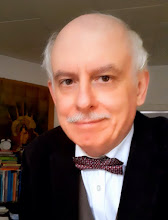
My photo
Education: Rotterdam Conservatory, Cambridge University // Activities: composition, writing

Monday, 2 January 2017

Ideology and truth

I stumbled into an interesting article on the site of The New Criterion, about the corruption of the German universities in the early 20th century, where ideology gradually replaced academic freedom in the pursuit of truth.

A comparable process we have seen in the last decades where academic curriculae have been politicized and academic pursuits were defined not by the search for truth but by the service to a political cause: in the footsteps of Foucault's marxist ideas that institutions, including the university, are mere instruments of political power applied by the bourgeoisie to protect its privileges.


The article set in motion a train of thoughts about the politization of academia and of culture...

The pursuit of truth is based upon the assumption that there is something like an objective truth, which can be discovered by different means and through different routes. This implies the necessity of pluralism, a field where competing approaches try to get to grips with reality. The philosophical cul-de-sac which claims that the world is merely our perception of it, i.e. entirely subjective, has to be rejected out of hand since it is clear that our senses, including our intelligence and intuition, developed in accordance with the evolution of the world. We are part of the world and our perception of it forms part of the world's reality. Instead of the world's nature being subjective, it is our mind's nature which is objective - as long as we assume that reality exists.

Only in a pluralist field something of truth can be found, and academia should be one of the islands where pluralism is accepted as normal. After all, every definition of truth and reality is, at least partly, provisional, until better definitions have been found.

For culture, ideology is the worst possible incarceration. Works of art are, most of the time, restricted by limitations of available means, of circumstances, places and periods, local cultures, financial possibilities, the talent of the maker etc. etc., but such restrictions are not - or don't have to be - ideological, and thus can be transcended by the artist. But an ideology cannot be transcended because an ideological work of art has, in the first place, to be a political expression. That is why the portraits of Velasquez of his king who commissioned them, are truly free works of art which speak of truth in characterization and expression, because they only had to present the monarch as such, while the many decorations which Charles le Brun made for the palace of Versailles are not, and although they are well-done, they are not so good as his free works because the painter had to express a political idea: the glory of the king and of France as a powerful nation.


Gerelateerde afbeelding

Velasquez


Afbeeldingsresultaat voor Charles LeBrun VErsailles

Le Brun: 'The King Rules by Himself', decoration at Versailles


Le Brun: Pietà

Thursday, 15 December 2016

Scruton at Donaueschingen Festival


This October, the British philosopher and aesthetician Sir Roger Scruton was invited to hold a lecture at the Donaueschingen Musiktage, one of the last bulwarks of modernist pleasures in the world where sonic art is still celebrated as music, and where the last sonic lovers flock from all over the world to enjoy the last glimmers of a bygone era, while everywhere else modernism has eroded and has been drastically discredited. This year, the program also included pop and Schlagers, because apparently there were no boundaries left to transgress, and - in a desperate attempt to find something to talk about - also Sir Roger was asked to offer a boundary which could be subjected to Adornian solvent. But Scruton's finely-drawn context appeared to be a very hard nut to crack.

His lecture can be found at:


------------------------------------------------------------------------------

Here follow some of the reactions in the media:

Tausende Besucher aus dem In- und Ausland - von Großbritannien bis Italien und von den USA bis Korea - sind angereist um das Festival mitzuerleben (from Finanznachrichten)

Die ästhetische Enttabuisierung ist durchaus umstritten, wie die Nachfragen bei der Pressekonferenz zeigen. Besonders die Lecture des englischen Philosophen Roger Scruton, der die Avantgarde in der Tradition von Pierre Boulez in der Sackgasse sieht, wurde heftig kritisiert. (Badische Zeitung)

Ein Motto oder eine Leitlinie gab es beim diesjährigen Festival so wenig wie ein zentrales Werk, dennoch waren bestimmte Themen auffällig verstärkt vertreten. Zum Beispiel die Hinwendung zu anglo-amerikanischer Musik und dem, was in diesen Ländern unter Avantgarde verstanden wird. Am deutlichsten wurde dieser Unterschied vielleicht gar Donaueschingen nicht in einem musikalischen Werk, sondern in dem Vortrag des englischen Philosophen Roger Scruton über das Thema „On Zukunftsmusik“. Scruton sprach von einer Sackgasse, in die uns Boulez und Stockhausen geführt hätten und propagierte eine neue Tonalität – noch deutlicher kann man sich von den in Donaueschingen geltenden ästhetischen Prinzipien kaum entfernen. (Graenzbote; reveiew repeated in the Schwäbische Zeitung)

Das Ende der dogmatischen Avantgarde?
So wenig Gottstein Berührungsängste zu Elektropop und verwandten Genres hat, so wenig fürchtet er sich vor kritischen Argumenten aus der entgegengesetzten Richtung. In der von ihm ins Leben gerufenen Vortragsreihe der "Donaueschingen Lectures" trat nun als erster der renommierte Schriftsteller und Musikphilosoph Roger Scruton auf. Scruton, ein höflicher Brite wie er im Buche steht und bekennender Konservativer, kritisiert Schönbergs Reihentechnik und den Nachkriegsserialismus als rein intellektuelle Erfindung, die den Gesetzen des Ohrs widerspreche und die neue Musik in die Sackgasse geführt habe. Damit ließ er natürlich den Donaueschinger Stallgeruch vermissen, was unter den Puristen der neuen Musik für Unruhe sorgte und bei der abschließenden Pressekonferenz dann auch offiziell aufs Tapet gebracht wurde. Donaueschingen, so hieß es, würde unzulässigen Geschichtskonstruktionen ein Forum bieten, ohne dass sich die Leitung davon distanziere. Die Vorhaltungen konterte Gottstein kühl: "Ich gebe Ihnen recht, dass diese Geschichtskonstruktion problematisch ist. Andererseits sind alle Geschichtskonstruktionen problematisch, und ich glaube nicht, dass irgendjemand hier eine unfehlbare Geschichtskonstruktion zur Hand hat. Wenn da jemand kommt, der eine hat, die wir überwunden zu haben glauben, dann ist es nicht meine Rolle, dem Herrn zu sagen, dass ich glaube, dass das überholt ist. Ich schreibe die Stücke nicht, ich halte die Vorträge nicht, ich bin nur dafür verantwortlich, welche Künstler und Redner hier eingeladen werden." Eine solcherart praktizierte Liberalität mag den eingefleischten Avantgardisten sauer aufstoßen, und der Fall zeigt, dass die alte Scheuklappenmentalität noch nicht ausgestorben ist. Doch das Plädoyer des neuen Festivalleiters für Toleranz lässt hoffen für die Zukunft. (Deutschlandfunk)

Wieder einmal: verstörende Momente. Da betritt der englische Philosoph Roger Scruton die Donaueschinger Bühne. Scruton war einst Berater von Margaret Thatcher und schrieb ein Buch über die Musik des 20. Jahrhunderts. Nun referiert er auf Englisch über zeitgenössische Musik beziehungsweise über das, was er für Neue Musik hält: über Werke Arnold Schönbergs also, über die von Pierre Boulez oder Karlheinz Stockhausen. Scrutons Schlüsse: Die Neue Musik hat sich in Systeme verrannt, habe das Ohr ebenso wenig berücksichtigt wie so etwas Nebulöses wie «physiologische Perzeptionsbedingungen». Ergo: Zeitgenössische Musik sei nur mehr eine Sache für jene Spezies, die sich zum Beispiel alljährlich in Donaueschingen trifft. Die Angesprochenen applaudierten nach dem Vortrag brav, verliessen schnell den Raum im Wissen darüber, dass es sich kaum lohne, auf den Referenten einzugehen. Allein die Auflistung Scrutons inhaltlicher Fehler würde den Rahmen sprengen. Nein: Theodor W. Adorno favorisierte keine schönbergsche Zwölftontechnik. Nein: Das Ohr ist keine überhistorische Konstante. Nein: Schon Beethoven war kein populäres Massenphänomen, das schöne Melodien schrieb, die jeder verstanden hat. Und nochmals nein: Neue-Musik-Festivals sind gut besucht, sei es in Berlin, in Stuttgart, auch in Oslo, Warschau oder eben Donaueschingen, wo sich im Gegensatz zu den 50er- oder 60er-Jahren nicht nur 50 Komponisten und Theoretiker trafen, sondern – laut Pressemeldung des Veranstalters – 10 000 Menschen, die sich öffnen und interessieren für das, womit sich heutige Komponisten und Klangkünstler beschäftigen. (Schweizer Musikzeitung)

Die ästhetische Enttabuisierung ist allerdings durchaus nicht unumstritten, wie die Nachfragen bei der Pressekonferenz zeigten. Besonders die Lecture des  englischen Philosophen Roger Scruton, der die Avantgarde in der Tradition von Pierre Boulez in der Sackgasse sieht, wurde heftig kritisiert. (Klassik-Info)
Wednesday, 7 December 2016

Ross about Germany

The music critic Alex Ross in The New Yorker 5/12/16:

"Germany, on the other hand, increasingly appears to be the strongest remaining bastion of liberal democracy. With the United Kingdom mired in the aftermath of Brexit, France facing a possible hard-right swerve, and Italy in disarray, the country that long stood as a synonym for nationalist insanity has so far resisted political and cultural regression. Tellingly, it has rejected the libertarian code of the big Silicon Valley companies, with their disdain for privacy, copyright, and limitations on hate speech. On the day after the American election, which happened to be the seventy-eighth anniversary of Kristallnacht, a neo-Nazi group posted a map of Jewish businesses in Berlin, titled “Jews Among Us.” Facebook initially refused to take down the post, but an outcry in the media and among lawmakers prompted its deletion. Such episodes suggest that Germans are less likely to acquiesce to the forces that have ravaged the American public sphere."


"The defeat of the Freedom Party candidate in the Austrian Presidential election is a hopeful sign: perhaps the German-speaking countries can remind the rest of the world of the darkness of their former path. Still, the far right is creeping forward in Germany, as it is all over Europe. No coming political race will be as tensely watched as Angela Merkel’s run next year for reëlection as Chancellor. The ultimate fear isn’t of the second coming of Hitler: history never repeats itself so obviously, and a sense of shame over the Nazi past remains pervasive in all corners of German life. No, the fear is that the present antidemocratic wave may prove too strong even for Germany—the only country in the history of the world that ever learned from its mistakes."

Tuesday, 22 November 2016

The defeat of meaning

People need meaning to be able to live life meaningful, and thus being able to endure hardship, disappointment, even great suffering.

A fascinating review on the site of 'Dissent Magazine' explains why today so many Russians are nostalgic for the utterly despicable social experiment that was the Soviet Union.

Quote:

Alexievich frequently speaks about how utopias have a tendency to end in bloodshed. Yet the testimonies of her interlocutors consistently show that little people need big ideas. This may help explain why the unspeakable hardships of the Soviet period were more bearable than the relatively more tolerable difficulties of post-Communist life. It is not death or suffering that her interviewees invariably fear most, but the absence of meaning. “Let us die as long as we know what we’re dying for,” a man tells her.
 
https://www.dissentmagazine.org/article/love-and-death-in-revolution-square

In Russia, some universal human processes were put into sharp focus through the tragedies of history and the insanity of utopianists. The article implicitly does also explain why so many people in the 'free, affluent' West are unhappy, depressed, prone to addictions - be it drugs, medicine, alcohol or compulsive shopping - while, in comparison to, for instance, life in the Soviet Union was so much more dramatic. The 20C 'death of the grand narratives': communism, socialism, capitalism etc., and the nihilism of what has been described as the 'postmodern condition' - anything goes and nothing is more than surface - left a void that cannot be filled with freedoms and affluence that have no meaning which can transcend the material level and appeal to man's spirit. But the Grand Narratives were empty as well, that is why they eventually failed to endure and be constructive and enduring, they were materialistic narratives, leaving-out the very element that can give meaning to life: culture, spirituality, an aspirational and ennobling vision of humanity, in spite of humanity's flaws. It was not painting, music and literature that created the gulags, the concentration camps and the blood-sucked battle fields, but materialistic 'ideals'.